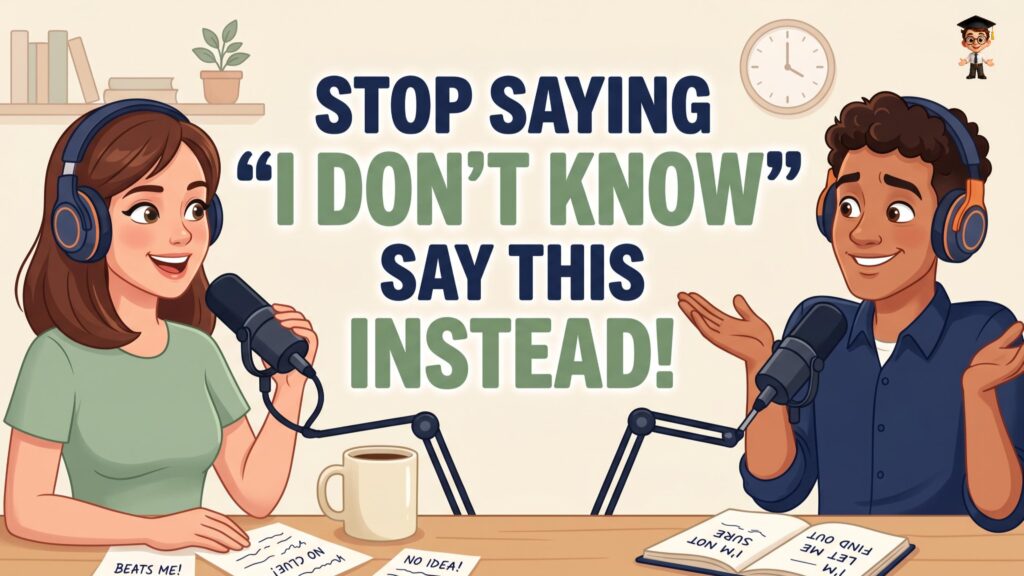
Hello, English learners! Have you ever found yourself saying “I don’t know” a little too often? While this phrase is simple and useful, repeating it can sometimes make you sound unengaged, or even a bit distant. But don’t worry, we’re here to help you expand your English vocabulary and sound more natural in your daily conversations!
Today, we’re going to explore fantastic alternatives to “I don’t know.” These phrases will not only make your English sound more authentic but also help you communicate more effectively and keep conversations flowing. Before we dive in, if you’re eager for more tips to enhance your English journey, be sure to read more on our blog.
Polite and Professional Alternatives
Sometimes, you need to be polite, especially when talking to strangers or in a professional setting. Here are two excellent options:
1. “I’m not really sure.”
This phrase is perfect for situations where you don’t have the exact answer, but you want to show willingness to help. It’s soft, friendly, and shows you care. Imagine you’re at a bakery, and a tourist asks you for directions to the central train station. You’ve just started working there, so you don’t know for sure. Instead of a blunt “I don’t know,” you could say:
- “I’m not really sure, let me check my phone map for you.”
This response immediately puts the other person at ease and demonstrates your helpful attitude, even if you don’t possess the information immediately. It’s ideal for shops, restaurants, or when interacting with people you don’t know very well.
2. “I’m not quite sure.”
This alternative is very similar to “I’m not really sure” but carries a slightly more formal and responsible tone, making it perfect for the workplace. For example, if your boss asks for the location of important marketing folders, and you truly don’t know, a simple “I don’t know” might sound lazy. Instead, you can say:
- “I’m not quite sure, Mr. Davis. Let me ask Sarah from the marketing team for you.”
This phrase shows initiative and responsibility. You’re not just ending the conversation; you’re offering a solution, which makes you look active and engaged in your job. It keeps communication open and positive.
Casual and Friendly Alternatives
When you’re with friends, family, or in very relaxed situations, you can use more informal phrases that sound completely natural and fun:
3. “I have no idea.”
This phrase is incredibly common in everyday English. We use it when we have absolutely zero knowledge about something. It’s a very popular expression you’ll hear in movies and daily conversations. For instance, if you and a friend are watching TV, and they ask you what time the grocery store closes tonight:
- “I have no idea, Emily. Let’s check online.”
It’s straightforward, natural, and perfectly fits a relaxed friendship. It flows smoothly in fast-paced conversations.
4. “I have no clue.”
This one often causes a little confusion because of its sound! Just to clarify, we mean “clue” (C-L-U-E), not “glue” (G-L-U-E)! A clue is a piece of information or a hint that helps you solve a mystery. So, when you say “I have no clue,” it means you don’t even have a small hint – you know absolutely nothing about the topic.
- “Paul, do you know who won the football match last night?”
- “I have no clue! I didn’t watch the game.”
This phrase is excellent for expressing complete ignorance about a specific question, especially one that might seem a bit random or unexpected, like being asked how to change a battery on a strange electronic device by a stranger in a park.
5. “Beats me!”
Now, don’t be scared by this one! “Beats me!” is a very informal and common idiom among native speakers, and it has nothing to do with fighting or aggression. It simply means “I don’t know” or “I have no idea.” Think of it like a game: the question was so difficult that it “beat” your brain, meaning you lost and couldn’t find the answer.
- “Paul, why do cats sleep so much during the day?”
- (Shrugs shoulders) “Beats me! Maybe they are just lazy!”
This phrase is super casual, so save it for close friends, family, or colleagues you know well. You definitely wouldn’t say “Beats me!” to your boss when asked for an important report!
Bonus Tip: How to Remember New Phrases
Learning new phrases is one thing, but remembering them and using them naturally is another. Here’s a simple, brilliant trick:
- Write down these new phrases on small sticky notes or pieces of paper.
- Place them in visible spots around your home: on your fridge, bathroom mirror, or computer screen.
When you see these phrases every day as you go about your routine, your brain will subconsciously remember them much faster. It’s an easy, effective way to integrate new vocabulary into your long-term memory without feeling like you’re “studying hard.”
Conclusion
You now have a fantastic toolkit of alternatives to “I don’t know”! From polite and professional to casual and fun, these phrases give you the control to choose the perfect response for any situation. Practicing these will make you sound more like a native speaker and boost your confidence in English conversations.
We hope you had as much fun learning today as we did sharing these tips with you. Don’t just listen to us – go out and use these words in your real life! Try them with friends, coworkers, or even at a coffee shop.
Remember to leave a comment below with the words “no clue” and tell us which phrase you liked the best today. Your support helps us create more free episodes for our amazing global community. Have a wonderful week, stay confident, and see you next time!