Hello everyone, and welcome back to Mr. English Channel! We are thrilled to have you here, ready to make learning English easy and fun. Today, we’re diving into a super useful topic that you’ll use every single day: talking about your past experiences!
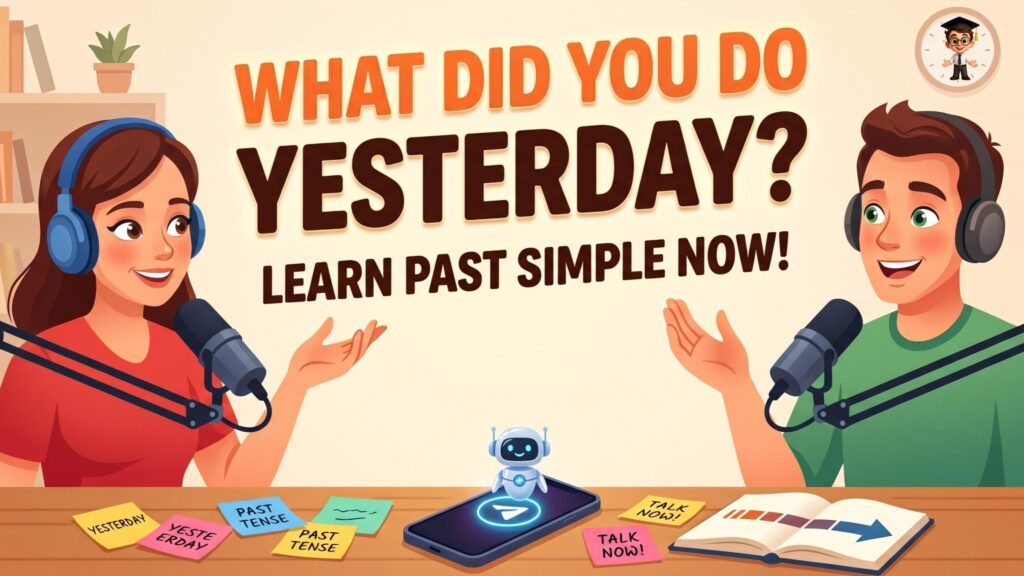
The question “What did you do yesterday?” is a classic for a reason. It’s the perfect way to start a natural conversation in English, allowing you to share your day, connect with others, and practice essential grammar. Let’s explore how to answer it with confidence!
Unveiling Yesterday: Emily’s Busy Day
Let’s start by looking at Emily’s day yesterday. It was quite busy, filled with many activities that demonstrate common past tense verbs.
Morning Routines
Emily started her day early, waking up at six o’clock. The first thing she did was
makea hot cup of coffee, and then she
cookeda delicious breakfast of eggs and toast. These actions highlight two important irregular verbs:
- The past tense of “make” is “made.”
- The past tense of “eat” is “ate.”
Irregular verbs change their form completely in the past, so it’s essential to learn their specific forms. For example, today you “eat,” but yesterday you “ate.”
Afternoon Adventures and Chores
After breakfast, Emily
walkedto a beautiful park and
listenedto some music. The weather was perfect! She
stayedthere for about an hour before heading home to tackle some light chores. She
cleanedher kitchen and
washedthe dishes. Notice how these verbs are different from “make” and “eat”:
- “Walked” and “listened” are examples ofregular verbs. We simply add “-ed” to the end of the base verb to form the past tense.
- “Cleaned” and “washed” also follow this regular pattern.
In the afternoon, Emily also
visitedher friend Sarah. They
dranktea and
talkedfor hours, practicing their English together. “Drank” is another irregular verb (from “drink”), while “talked” is regular.
Paul’s Relaxed Yesterday
Paul’s day was a bit more relaxed, offering more examples of past tense usage, including negative statements.
A Leisurely Start
Unlike Emily, Paul
did not wake upearly. He
stayedin bed until nine o’clock! He
did not makecoffee, choosing to
drinka large cup of green tea instead. He
did not cookbreakfast but
atea banana and yogurt. These sentences beautifully illustrate how to form negative statements in the past, using “did not” (or “didn’t”) followed by the base form of the verb.
Reading, Exercising, and Eating Out
After his healthy breakfast, Paul
reada chapter of a mystery book. This is a tricky one! The spelling of “read” in the past tense is the same as the present tense, but the pronunciation changes. (Today I
read/riːd/, yesterday I
read/red/). For more on irregular verbs, check out resources like the Cambridge Dictionary.
Paul then
didsome simple yoga stretches and later
ordereda delicious plate of pasta from a local Italian restaurant. He
watcheda funny movie and
calledhis brother to chat. He
laugheda lot during the movie, showing how much he enjoyed his relaxed day. “Watched,” “ordered,” “laughed,” and “called” are all regular verbs.
Evening Stories and the Mr. English Community!
Before we dive into our evening stories, we have exciting news! Our new
Mr. English Telegram communityis launching for the first group of people today! This will be a fantastic place for you to meet and practice English together, ask questions, and help each other. Plus, the
Mr. English AI featurewill be there for you to practice conversations anytime!
Keep an eye on our YouTube channel for a post with all the links and information soon. We’re building a strong, organized community, so everyone will get access! We can’t wait to see you there!
Emily’s Quiet Evening
Yesterday evening, Emily
cookeddinner for her family, making a big pot of chicken and vegetable soup. After dinner, she
did not watchTV. Instead, she
listenedto an interesting podcast about history. She
wentto bed at ten o’clock and
sleptlike a baby. “Slept” is another irregular verb (from “sleep”).
Paul’s Social Evening
Paul
did not go outyesterday evening. He
stayedhome and
inviteda friend over for dinner. They
did not cook, instead
orderingdelicious hamburgers and French fries. After eating, they
playeda fun video game. Paul’s friend
wonthe first game, but Paul happily
wonthe second! After his friend
leftat nine o’clock, Paul
brushedhis teeth,
puton his pajamas, and
wentstraight to bed. “Won” (from “win”), “left” (from “leave”), and “put” are all irregular verbs.
Mastering Past Tense: Short Answers, Negatives, and Questions
Talking about your past doesn’t have to be complicated. Let’s look at how to give short answers, make negative statements, and ask questions effectively.
Short vs. Long Answers
When someone asks, “What did you do yesterday?”, you can give a short, concise answer or a longer, more detailed one.
- Short Answer:”I went to work and then I relaxed at home.”
- Long Answer:”Yesterday morning, I cleaned my room, and then in the afternoon I met my friend for lunch.” (Remember to use the past tense: “cleaned,” not “clean”!)
Mistakes are a normal part of learning, even native speakers make them! The key is to learn from them and keep practicing.
Forming Negative Sentences
To talk about things you
did notdo, we use “did not” (or the short version, “didn’t”) followed by the normal, base form of the verb. The main verb does
notchange.
- “Ididn’t watchTV yesterday.” (Not “I didn’t watched.”)
- “Yesterday, Ididn’t goto the supermarket because I had food at home.”
Asking Questions in the Past Tense
To ask questions about the past, we start with the word “Did.” Again, the main verb stays in its normal, base form.
- “Did you watchthe game yesterday?” (Not “Did you watched?”)
- “Emily,did you studySpanish yesterday?” Emily replied, “No, Ididn’t studySpanish, but Idid studya little bit of French!”
- “Did youbuyanything online yesterday?” “No, Ididn’t buyanything online. I tried to save my money.”
- “Did you drinkcoffee yesterday?” “No, Ididn’t drinkcoffee. I only drank green tea.”
- “Did you listento any good music yesterday?” “Yes, Idid! I listened to some beautiful jazz music while I was cooking dinner.”
- “Did your family helpyou cook dinner yesterday?” “No, theydidn’t helpme cook, but theyhelpedme clean the table after dinner.”
Describing Different Scenarios
You can use past tense verbs to describe a variety of situations:
- A Rainy Day:”Yesterday itrainedall day, so Istayedinside.”
- A Difficult Day:”Yesterdaywasa difficult day. Ilostmy keys and Imissedmy bus.” (“Lost” is irregular from “lose,” “missed” is regular from “miss.”)
- A Busy Day at Work:”Yesterday, Iansweredfifty emails,attendedthree meetings, andfinishedmy big project.” (Notice how commas connect these verbs to tell a nice story.)
Emily also shared that she
spentsome time in her garden, where she
wateredher plants and
checkedon her small tomatoes. Paul, on the other hand,
didn’t usehis telephone too much, preferring to look at the real world instead of a screen. These examples show how easily we integrate past tense into everyday conversations.
Keep Practicing and Sharing!
It’s amazing how many past tense verbs we use in just a few simple sentences! Practicing this topic is crucial for fluency. Every small step is important on your learning journey. We hope these stories and explanations helped you understand how to talk about your past in English.
Learning naturally through stories is truly the secret to success! For more insights and tips on mastering English, you can always read more on our blog.
Don’t forget to subscribe to Mr. English Channel, like this video, and leave your comment below about our big Telegram news! Thank you so much for listening. Goodbye, everyone, and we’ll see you in the next episode!