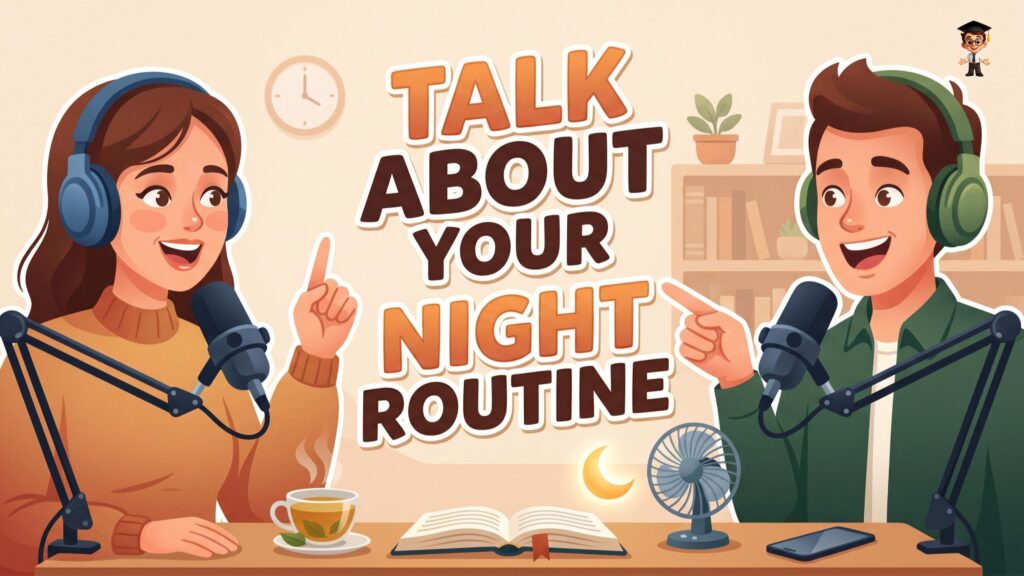
Hello everyone and welcome! Today, we are diving into a topic that affects us all: our night routine. How we spend our evenings, especially the hours before bed, can completely change how we feel the next day. From the moment you walk through your front door until your head hits the pillow, every action plays a part in your well-being and, crucially, your English learning journey!
Setting the Scene: Your Evening Begins
For many of us, the evening truly begins when we arrive home after a long day. The first step for some, like Emily, is to kick off their shoes and slip into comfortable pajamas. This simple act is more than just about comfort; it’s a powerful signal to your brain that work is over and it’s time to relax. Paul agrees, noting how changing into comfy clothes helps his mind understand that the workday has officially ended. This “signal” is essential for transitioning from busy to calm.
After settling in, what comes next? While Emily often heads straight to the kitchen, driven by hunger, Paul prefers a moment of peace. He likes to sit on the sofa for ten minutes, just to breathe and enjoy the quiet. This highlights a key point: there’s no single “right” way to start your evening, but finding what helps you unwind is crucial.
Dinner Delights: What and When to Eat
Eating a good dinner is a major part of the evening for most people. Emily enjoys preparing something simple and healthy, like a salad or a warm soup. Paul, on the other hand, prefers a slightly larger meal. However, they both emphasize the importance of *when* you eat. Eating too late, especially heavy meals, can make it difficult to sleep because your stomach is working too hard. Aiming to finish dinner around 7:00 PM, like Emily, allows enough time for digestion before bedtime. Plus, cleaning the kitchen after dinner can make the next morning feel much easier and less stressful!
The Digital Dilemma: Phones, Screens, and Sleep
Once dinner and chores are done, it’s often “me time.” For many, this sadly means reaching for the phone. What starts as “just five minutes” can easily turn into an hour of “infinite scrolling”—looking at cat photos, travel videos, or social media. While tempting, this habit doesn’t actually help you feel rested.
Paul explains why: the “blue light” emitted from phone screens tells your brain that it’s still daytime. This suppresses melatonin, the hormone that helps you sleep. It’s like your brain thinks the sun is still up, making it incredibly hard to fall asleep later. To combat this, smart strategies include putting your phone away by a specific time, like Paul’s 9:00 PM rule, or even leaving it in another room. For more information on the effects of blue light on sleep, you can read this article from Harvard Health.
Instead of endless scrolling, consider relaxing activities like reading a book, listening to soft music, or watching just one episode of a favorite TV show. While shows can be exciting, remember that watching too many can turn you into a “zombie” the next morning! Prioritizing sleep means prioritizing your best self.
Cultural Differences in Evening Habits
Our night routines are also shaped by culture. While some people enjoy a quiet evening at home, others love going out. Emily and Paul enjoy going out with friends once or twice a week, preferring quiet restaurants, cafes, a walk in the park, or a movie rather than loud music and dancing on a Tuesday night! A walk at night, when the city is quiet, can be incredibly refreshing.
It’s fascinating to see how routines differ globally. In some countries, like Spain or Italy, people often eat dinner as late as 10:00 PM, a time when many others are already heading to bed! Conversely, in other cultures, streets can be empty by 8:00 PM. This highlights that there’s no universal “perfect” night, but finding a balance that works for you is key.
Healthy vs. Unhealthy Night Habits
To truly master your evenings, it helps to distinguish between habits that support good sleep and those that hinder it. Here are a few examples:
- Healthy Habits:
- Drinking a warm cup of herbal tea, like chamomile, which is excellent for relaxation.
- Writing down your “to-do” list or worries on paper. This helps your brain “let go” of those thoughts, preventing a “party of stress” in your head just before sleep.
- Unhealthy Habits:
- Eating a lot of chocolate or sugary snacks right before bed. This can give you too much energy and make your heart beat fast, making sleep difficult.
- Thinking about work or stressful things when you’re trying to fall asleep. Our worries often like to visit when we’re quiet at night.
If you’re enjoying learning English through practical topics like this, you can read more on our blog for more engaging content and language tips.
Crafting Your Bedtime Ritual
The final preparation for sleep, your actual bedtime routine, is perhaps the most important part of your evening. For Emily, it starts with a warm shower, washing away the day’s stress and leaving her feeling clean and relaxed. This is often followed by a thorough skincare routine.
While Paul’s routine is shorter – washing his face and brushing his teeth – brushing your teeth is an absolute must for everyone! After these personal care steps, the bedroom environment becomes key. Paul ensures his room is cool and dark. Emily also prioritizes a dark room and uses a small fan for a bit of “white noise,” which helps block out street sounds and allows her to focus on sleeping.
Conquering Sleep Challenges
Even with a good routine, sleep problems can arise. Many people struggle with insomnia or waking up in the middle of the night, often leading to panic when they see the clock and realize how few hours of sleep they might get. This thought alone can make it even harder to sleep, creating a “circle of stress.”
When this happens, Paul recommends focusing on your breathing. Taking deep breaths and trying to clear your mind can be very helpful. While “counting sheep” works for some, it doesn’t always do the trick. Paul finds peace through prayer and reflection, which helps him feel thankful for the day and trust that he can leave everything in good hands. This acts like a mental “reset” button, allowing him to end the day with peace.
Before closing your eyes, take a moment for reflection. Think about what went well today, what you learned, or funny things that happened. Focusing on positive things can even lead to better dreams!
The Ripple Effect: Better Nights, Better Mornings
Emily has noticed a powerful truth: when she has a good night routine, her morning is 100% better. Paul completely agrees; the night truly is the foundation for the next morning. If you go to bed late and spend hours on your phone, you’re likely to wake up feeling angry and tired. Respecting your body and giving it the rest it deserves means waking up feeling happy and full of energy.
Evenings are also a wonderful time for light conversations, especially with family or a partner. These “night talks” can be incredibly special, allowing you to connect without the noise and distractions of the busy day. No phones, no TV, just talking and listening – a perfect way to build strong relationships and a peaceful heart.
From cooking dinner to deep breathing, we’ve explored so many aspects of the night routine. Remember, small changes can make a big difference over time. Consistency is key – doing the same good things every day. Your routine doesn’t have to be perfect; it just has to be yours.
Tonight, consider making a small change. Maybe it’s drinking a glass of water instead of coffee, reading one page of a book, or trying Paul’s “no phone after 9 PM” rule. You will feel so much better tomorrow morning; you might even wake up with a smile!
We hope you have a very peaceful night tonight. Sleep well, dream big, and remember that every night is a chance to rest and start fresh. Thank you for being with us on Mr. English Channel. Remember to practice new words like “unwind,” “scrolling,” “bedtime,” and “consistency.” Learning a little bit every day—and every night—is the best way to improve.
If you enjoyed this episode, please subscribe and give us a “thumbs up”! It helps us a lot. And leave a comment! Tell us what you do before you go to sleep. We love reading your stories and learning about your cultures. Have a wonderful evening and a great night’s sleep. Goodbye everyone!